
Mitral regurgitation (or “MR”) is a condition affecting one of the valves in your heart, the mitral valve. The valves in your heart control the flow of blood through the four chambers of your heart. Each heart valve is made up of thin, but strong flaps of tissue. As blood flows through the four chambers of the heart, the valves open and close to ensure that blood flows in the right direction.
The mitral valve is located between your heart’s two left chambers and allows blood to flow forward through your heart during a normal heart- beat. When the mitral valve fails to close completely, blood flows backward in the opposite direction. This backward flow is called mitral regurgitation.
Cause:
There are several causes of mitral regurgitation. These include:
Symptom:
In order to compensate the effect of mitral / tricuspid regurgitation, the ventricles would increase its pumping action to maintain enough blood supply to our body. Heart muscle would then be overloaded and becomes enlarged in size and weak. This extra burden on the heart and lungs may lead to heart failure in the long run. There would be insufficient blood supply for the body requirement, and may eventually lead to arrhythmia (irregular heartbeat), stroke, and even sudden death.
Patients with mitral / tricuspid regurgitation might not experience symptoms, or some may have:
The MitraClip procedure:
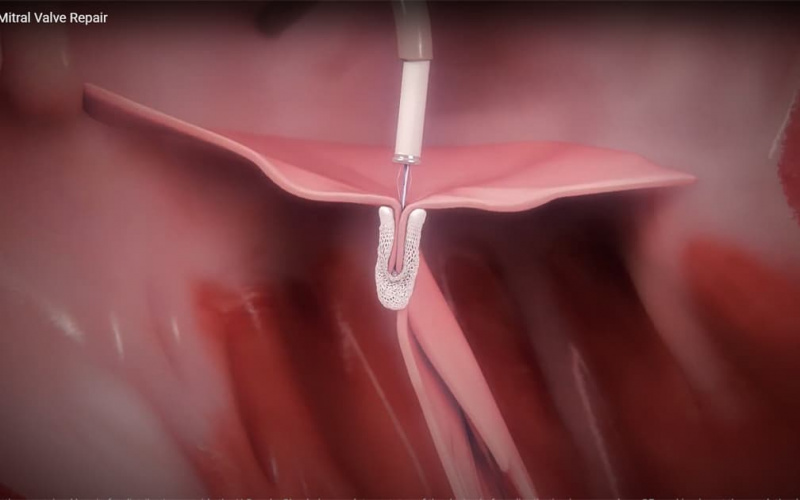
A MitraClip procedure is carried out under a general anaesthesia in catheterization laboratory with assistance of trans-esophageal echocardiography (TEE) and X-rays. During the procedure, doctors access the mitral valve with a thin tube (called a catheter) that is guided through a vein in patient’s leg to reach the heart. The MitraClip is then clipped to the mitral valve and help it close completely. A procedure usually takes three to four hours on average but it can vary due to different anatomies. The length of hospital stay is around one to five days following the procedure.
MitraClip surgery risks and postoperative instructions: