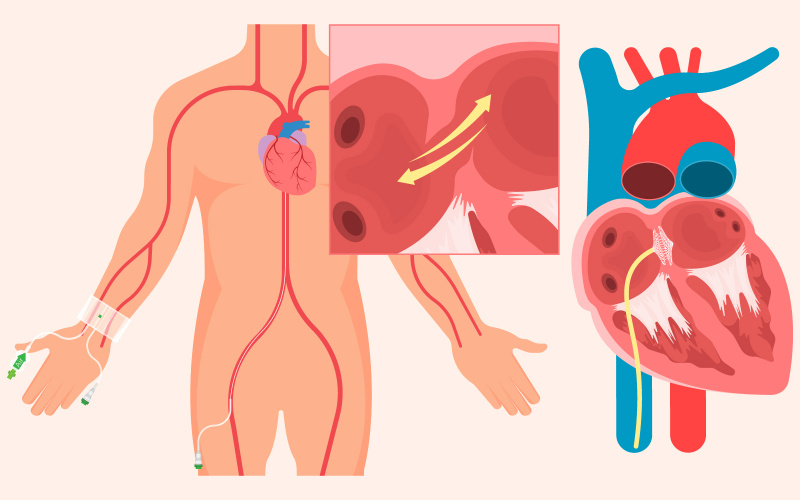
Atrial Septal Defect (ASD) is a common congenital heart disease. A hole in the septum between the left and right atria causes abnormal blood shunting, which increases the burden on the heart.
Additionally, the Patent Foramen Ovale (PFO) is located between the left and right atria. In most people, it closes naturally after birth. If it remains open, it is called a PFO. While adults with this condition can lead normal lives, it can increase the risk of blood clots.
Procedure:
- The surgery is performed in the Cardiac Catheterization and Interventional Laboratory (CCIL). The doctor will decide whether General Anaesthesia or Monitored Anaesthesia Care is required based on the situation.
- Nurses will apply electrodes to monitor your heart rate and rhythm, and provide a pulse oximeter for oxygen levels. Your blood pressure will also be measured periodically during the procedure.
- After anaesthesia, the doctor will perform a Transesophageal Echocardiogram (TEE) to confirm the extent of the defect/PFO and to evaluate the surgical outcome later.
- A puncture is made in the groin (inner thigh) to access the vein.
- A catheter is then guided into the heart to measure pressure in different chambers and calculate the degree of abnormal blood shunting. Contrast medium may be injected and X-ray images taken for records.
- A specialized balloon is used to measure the size of the defect, after which the doctor will insert an appropriately sized occluder device.
- Upon completion, the catheters are removed. Depending on the wound condition, sutures and pressure dressing may be required to stop bleeding.
- The procedure usually takes 2–3 hours.
- Close observation is required following the surgery.
Post-operative Follow-up:
- Under normal circumstances, you can be discharged 1–3 days after surgery.
- Before discharge, medical staff will check the wound and cover it with sterile gauze. Keep the wound clean; if the gauze becomes wet, replace it immediately. You can usually shower on the second day after surgery.
- Avoid strenuous exercise for the first 7 days. Minor bruising near the wound is common and typically disappears within 2–3 weeks.
- Seek immediate medical attention at the hospital or emergency department if you weather signs of infection, increased swelling, pain, or discharge from the wound.
- The doctor will explain the surgical results before discharge. Any further questions can be discussed during follow-up appointments.
Would you like more information on post-surgery medication (such as blood thinners) or specific dietary advice for recovery?