

Atrial fibrillation (AFib) is a common type of arrhythmia. Patients usually experience an irregular and extremely rapid heartbeat.
AFib is classified into three main types:
● Paroxysmal (lasts no more than 7 days, typically within 24 hours)
● Persistent (lasts more than 7 days)
● Permanent (lasts over one year)
It is estimated that around one percent of the population in Hong Kong suffers from atrial fibrillation. Based on the current population of over 7 million, this accounts for approximately more than 70,000 patients.
The heart consists of the left and right atria in the upper chamber and the left and right ventricles in the lower chamber.
The sinoatrial node located on the upper wall of the right atrium acts as the heart's natural pacemaker. When abnormal cells in the atria generate erratic electrical impulses, the atria lose control by the sinoatrial node and contract rapidly and irregularly, resulting in fibrillation.
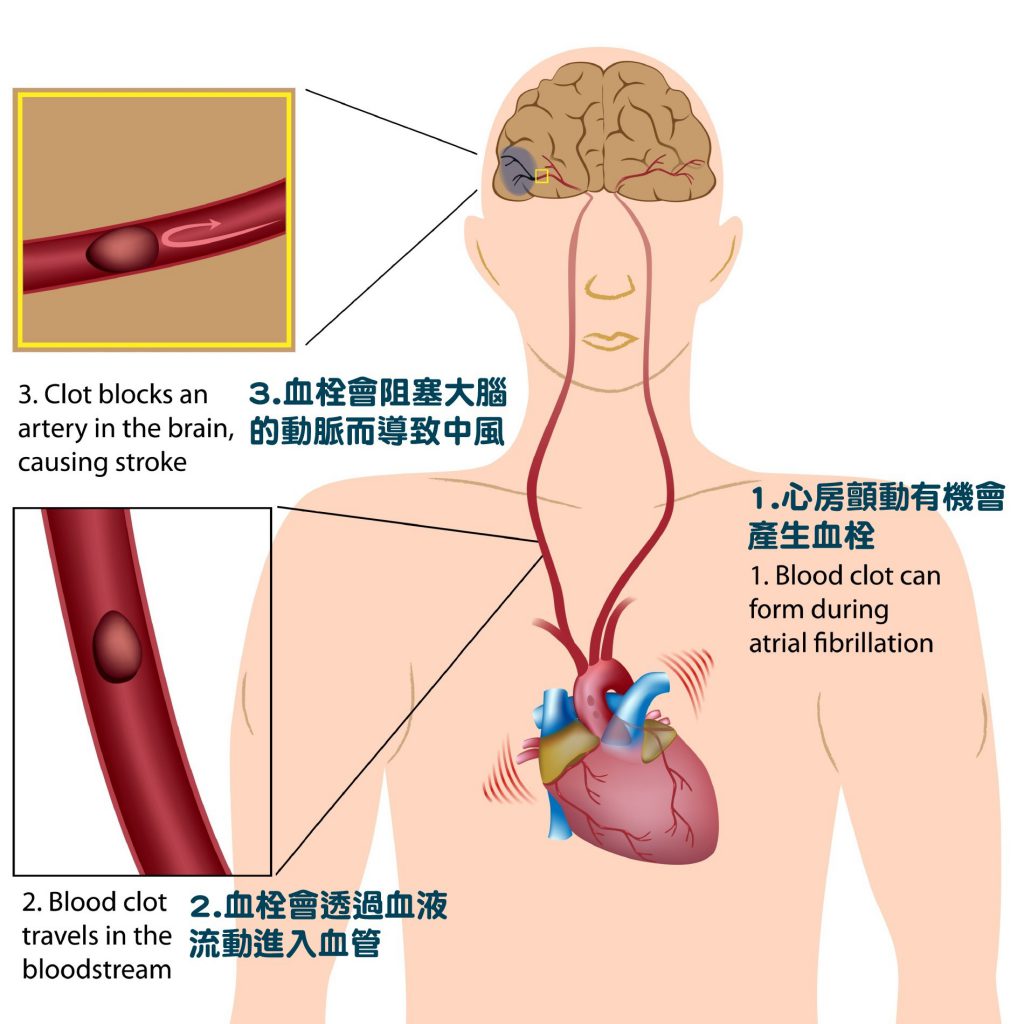
The ventricles fail to pump blood effectively to the whole body. Some blood may stagnate in the atria and form blood clots. If these clots enter the bloodstream, they can block blood vessels and lead to illnesses such as stroke, a common complication.
Atrial fibrillation (AFib) is a common type of arrhythmia. Patients usually experience an irregular and extremely rapid heartbeat.
AFib is classified into three main types:
● Paroxysmal (lasts no more than 7 days, typically within 24 hours)
● Persistent (lasts more than 7 days)
● Permanent (lasts over one year)
It is estimated that around one percent of the population in Hong Kong suffers from atrial fibrillation. Based on the current population of over 7 million, this accounts for approximately more than 70,000 patients.
The heart consists of the left and right atria in the upper chamber and the left and right ventricles in the lower chamber.
The sinoatrial node located on the upper wall of the right atrium acts as the heart's natural pacemaker. When abnormal cells in the atria generate erratic electrical impulses, the atria lose control by the sinoatrial node and contract rapidly and irregularly, resulting in fibrillation.
The ventricles fail to pump blood effectively to the whole body. Some blood may stagnate in the atria and form blood clots. If these clots enter the bloodstream, they can block blood vessels and lead to illnesses such as stroke, a common complication.
Atrial fibrillation (AFib) is a common type of arrhythmia. Patients usually experience an irregular and extremely rapid heartbeat.
AFib is classified into three main types:
● Paroxysmal (lasts no more than 7 days, typically within 24 hours)
● Persistent (lasts more than 7 days)
● Permanent (lasts over one year)
It is estimated that around one percent of the population in Hong Kong suffers from atrial fibrillation. Based on the current population of over 7 million, this accounts for approximately more than 70,000 patients.
The heart consists of the left and right atria in the upper chamber and the left and right ventricles in the lower chamber.
The sinoatrial node located on the upper wall of the right atrium acts as the heart's natural pacemaker. When abnormal cells in the atria generate erratic electrical impulses, the atria lose control by the sinoatrial node and contract rapidly and irregularly, resulting in fibrillation.
The ventricles fail to pump blood effectively to the whole body. Some blood may stagnate in the atria and form blood clots. If these clots enter the bloodstream, they can block blood vessels and lead to illnesses such as stroke, a common complication.
Atrial fibrillation (AFib) is a common type of arrhythmia. Patients usually experience an irregular and extremely rapid heartbeat.
AFib is classified into three main types:
● Paroxysmal (lasts no more than 7 days, typically within 24 hours)
● Persistent (lasts more than 7 days)
● Permanent (lasts over one year)
It is estimated that around one percent of the population in Hong Kong suffers from atrial fibrillation. Based on the current population of over 7 million, this accounts for approximately more than 70,000 patients.
The heart consists of the left and right atria in the upper chamber and the left and right ventricles in the lower chamber.
The sinoatrial node located on the upper wall of the right atrium acts as the heart's natural pacemaker. When abnormal cells in the atria generate erratic electrical impulses, the atria lose control by the sinoatrial node and contract rapidly and irregularly, resulting in fibrillation.
The ventricles fail to pump blood effectively to the whole body. Some blood may stagnate in the atria and form blood clots. If these clots enter the bloodstream, they can block blood vessels and lead to illnesses such as stroke, a common complication.
Atrial fibrillation (AFib) is a common type of arrhythmia. Patients usually experience an irregular and extremely rapid heartbeat.
AFib is classified into three main types:
● Paroxysmal (lasts no more than 7 days, typically within 24 hours)
● Persistent (lasts more than 7 days)
● Permanent (lasts over one year)
It is estimated that around one percent of the population in Hong Kong suffers from atrial fibrillation. Based on the current population of over 7 million, this accounts for approximately more than 70,000 patients.
The heart consists of the left and right atria in the upper chamber and the left and right ventricles in the lower chamber.
The sinoatrial node located on the upper wall of the right atrium acts as the heart's natural pacemaker. When abnormal cells in the atria generate erratic electrical impulses, the atria lose control by the sinoatrial node and contract rapidly and irregularly, resulting in fibrillation.
The ventricles fail to pump blood effectively to the whole body. Some blood may stagnate in the atria and form blood clots. If these clots enter the bloodstream, they can block blood vessels and lead to illnesses such as stroke, a common complication.
Atrial fibrillation (AFib) is a common type of arrhythmia. Patients usually experience an irregular and extremely rapid heartbeat.
AFib is classified into three main types:
● Paroxysmal (lasts no more than 7 days, typically within 24 hours)
● Persistent (lasts more than 7 days)
● Permanent (lasts over one year)
It is estimated that around one percent of the population in Hong Kong suffers from atrial fibrillation. Based on the current population of over 7 million, this accounts for approximately more than 70,000 patients.
The heart consists of the left and right atria in the upper chamber and the left and right ventricles in the lower chamber.
The sinoatrial node located on the upper wall of the right atrium acts as the heart's natural pacemaker. When abnormal cells in the atria generate erratic electrical impulses, the atria lose control by the sinoatrial node and contract rapidly and irregularly, resulting in fibrillation.
The ventricles fail to pump blood effectively to the whole body. Some blood may stagnate in the atria and form blood clots. If these clots enter the bloodstream, they can block blood vessels and lead to illnesses such as stroke, a common complication.
由於一些心臟病可誘發其他心疾,例如風濕性心臟病,是導致瓣膜性心臟病的其中一種心臟病成因,所以病人有可能患上多於一種心臟病。
由於不少心臟病病人在患病早期時都可能沒有心臟病症狀,定期檢驗就成為了最好的預防方法,特別本身屬高危群組的人,例如肥胖、年長或有家族病史等,都應格外留意心臟病先兆。
部分可以,但因為不少心臟病都是結構或功能性問題,驗血並不一定可提供相關數據作心臟病症狀診斷。
由於只能記錄短時間內的心電活動,如果在期間病人沒出現心臟病發,心律等又沒出現異常,便未可反映病人實況。
有高血壓的病人不一定有心臟病,但是高血壓是心臟病成因之一。如果病人有高血壓,長期可對血管及心臟造成損害,提高患病風險。
每個人的心臟病成因及症狀各有差異,例如有些人病發時會出現胸悶、暈眩,而不一定會出現胸口痛的心臟病症狀。
由於病人心臟功能積弱,影響供血到腎臟,導致病人難以排尿去水,便會出現水腫。而到心臟病病人躺下時,血液較易流動,身體就會開始借此排出積聚的多餘水份,令心臟病病人出現尿頻。
這要視乎心臟病病人的嚴重情度、年紀等,但一定的運動量是保持心臟健康的重要因素。病人如果已出現心臟病症狀,應向專家咨詢運動量建議。
大部分檢驗,由於是非入侵性,並沒有太多限制。但電腦掃描方面,由於病人要注射顯影劑,或心導管這種入侵性檢驗,懷疑出現心臟病先兆的病人應事先向醫護人員咨詢,充分了解當中的風險及因應個人的醫療需要進行。
因為女性荷爾蒙可助維持血管彈性外,亦影響血液中膽固醇水平,因此年輕女性心臟病發的相對風險較低。但當女性步入更年期後,女性荷爾蒙會減少,而年長老化是其中一個最主要的心臟病成因,年長女性患心臟病機率就會回升至與男性相約水平。
由於不少心臟病症狀事實上都會與壓力過大十分相近,而延誤確診的後果可大可小。病人一旦疑似出現心臟病先兆都應盡早求醫。專家如排除病人患心臟病的可能性後,亦可盡早轉介病人以免病情加重。
這要視乎病人的心臟病成因及本身年齡等因素。一些病人在手術後可完全康復,而一些病人則需要長期服藥以控制心臟病發的風險。
病情較輕微的病人,可以透過藥物治療去減輕心臟病症狀。但如果病情嚴重或惡化,病人就有機會需要進行心瓣膜手術。
因大部分的心臟病成因都與退化或生活習慣有關,要有效預防心臟病,我們應盡可能保持良好習慣,例如多運動、飲食均衡、戒煙酒、保持正常作息及放鬆心情等。另外,定期驗身亦是預防心臟病發的重要一環。
如病人出現任何心臟病症狀,應盡早求醫。一旦確診心臟病,醫護會處方合適的藥物。建議病人不應在未經確診下胡亂購買或服用心臟病藥物。
BMI是身型的指標,超標就是有肥胖問題,而肥胖是其中一個重要的冠心病原因。雖然肥胖並不等於病人一定會患上冠心病,但卻會帶來莫大風險,因為肥胖長期會增加患上糖尿病、高血壓及高膽固醇的風險,因而又大幅增加患冠心病危機。所以,如果BMI偏高或超標,都應開始調節生活習慣,以減低肥胖有可能成為冠心病成因。
可以,但不應太激烈。冠心病治療之中,適量而恆常的帶氧運動有助患者減低冠心病發作的次數,而且運動有助控制肥胖問題,由根源去減輕一些冠心病成因。不過,由於確診病人的心血管情況各異,病人應先咨詢醫護意見,並定立合適的運動計劃。
糖尿病只是其中一種冠心病成因,病人不一定會因此患上冠心病。但是糖尿病患者患病比率較一般人高出2-3倍。而且由於糖尿病有可能破壞病人的心臟神經,令病人感覺不到心絞痛,病人亦會因此不能及時發現患病而導致延誤冠心病治療。
前者只能記錄短時間內的心電活動,如在檢驗時病人沒出現發作,結果便未能反映病人實況。包括血液指標等,雖然可以為醫護提供一些數據作評估,但由於這些數據對於冠狀動脈評估未必足夠,而且病人可以在已患病情況下卻沒有任何冠心病症狀,所以定期做這兩項檢驗並不足以作為足夠的冠心病檢查,病人亦不能以結果作定論。
如果壓力問題已經導致生理健康問題,病人就必須同步處理生理及心理問題。由於冠心病嚴重時可危及性命,無論冠心病原因是什麼,病人都應及時求醫,並與專家商量最佳的治療方案。
飲食講究均衡及有營養,大量攝入酒精是導致冠心病成因,但只要控制飲用量,就不至於有太大問題。不過由於酒精始終是刺激性物質,飲用後會影響心跳,即使飲用,亦只宜少酌。至於「飲酒強心」一說,醫學上未有實論證明,如此一來,如果病人已確診冠心病,仍以戒酒為最好。
兩種都是病人可自行購買的藥物,但病人服藥,無論是什麼藥物,其實都應在醫護指示下進行。病人不應在未求醫或未確診下胡亂服藥。另外,由於脷底丸在開蓋後只可存放8 星期,病人要特別留意購買渠道,以確保藥物安全有效。
由於脷底丸的作用原理是讓血管擴張以緩解冠心病症狀,服用後病人有機會出血壓低、頭暈的症狀。其他副作用包括頭痛、面部發熱或發紅及心跳加速等。
如果本身沒有任何病徵,而在多項冠心病成因中又屬低風險人士,每年都應最少做包括心電圖及驗血等的基本項目。如果病人已有一些長期疾病,或本身已有一些高危冠心病風險,就應選擇一些進階的項目,例如電腦血管掃描。但如果病人已經出現冠心病症狀,就應該盡早求醫,由專家建議合適的方案。
專家一般會從病人的胸腔或腿部中取出合適的血管來用。
缺乏女性荷爾蒙雖然是其中一個間接的冠心病成因,但年長老化的影響同樣不容忽視,所以單靠荷爾蒙藥物未必可防止患上冠心病。
由於一些冠心病成因如性別及年齡等是不可改善的,良好的生活習慣亦只可把患病機率大大減低,而不能完全避免。
首先,請留意係是否已經曾出現一些冠心病症狀。如果有,就應盡早求醫,由專家建議你應做的冠心病檢查或治療。如果沒有,由於部分病人可以沒有明顯的冠心病症狀,最穩妥亦是及早向醫護人員查詢合適的檢驗方案。
有。由於此病多是年月累積,而且與生活習慣及年齡有關,如病人不從源頭改善身體又或是病人年老,老化無可避免,冠心病都會有可能復發。
由於部分藥物可能出現相沖,特別冠心病常用的抗血小板藥,病人應在醫護處方藥物時留意囑咐。另外,飲食習慣與導致冠心病原因有直接關係,病人不論是否在進行治療都應作適度調整,以保持心血管健康。
早年未必有明顯症狀,但之後可能出現:
心房間隔缺損是一種先天性結構問題。
心臟超聲波